
 Q. No.
In which of the following gametophyte is not independent free-living?
| 1. | Funaria | 2. | Marchantia |
| 3. | Pteris | 4. | Pinus |

Occurrence of triploid (3n) primary endosperm nucleus is a characteristic feature of
(1) Algae
(2) Gymnosperms
(3) Angiosperms
(4) Bryophytes


The diploid sporphyte is represented by a dominant, independent, photoshynthetic, vascular plant body. It alternates with multicellular, saprophytic/autotrophic, independent but short-lived haploid gametophyte. This type of pattern is exhibited by
1. Bryophytes (Sphagnum, Polytrichum).
2.Pteridophytes (Selaginella, Lycopodium).
3. Most of the algal genera (Fucus, Chara, Polysiphonia).
4. Seed plants (gymnosperms and antiosperms).
The life cycle pattern shown in the given diagram is not seen in:
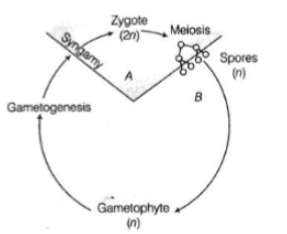
1. Chlamydomanas
2. Spirogyra
3. Volvox
4. Ectocarpus


Vascular archegoniates with diplontic life cycle are
1 Bryophytes
2 Pteridophytes
3 Gymnosperms
4 More than one option is correct
Embryo of sunflowers have:
1. Two cotyledons
2. One cotyledons
3. Eight cotyledons
4. Cotyledons absent
Sorry!! currently, the explanation for the question is not provided. If you need further help, please email at support@neetprep.com with subject: Explanation Missing for Question Id: 264464
Read the following statements
a. Sporophyte is the dominant, photosynthetic, independent phase of the plant.
b. Highly reduced female gametophyte as embryosac is present in their ovule.
c. The pollen grains are carried in air currents and come in contact with the opening in the ovules.
How many statements are correct for gymnosperms and angiosperms respectively?
1. One and two
2. Zero and three
3. Two and two
4. Three and two


| 1. | All pteridophytes exhibit haplo-diplontic pattern. |
| 2. | Seed bearing plants follow haplontic pattern. |
| 3. | Most algal genera are diplontic. |
| 4. | Most bryophytes do not have haplo-diplontic life cycle. |

© 2026 GoodEd Technologies Pvt. Ltd.